
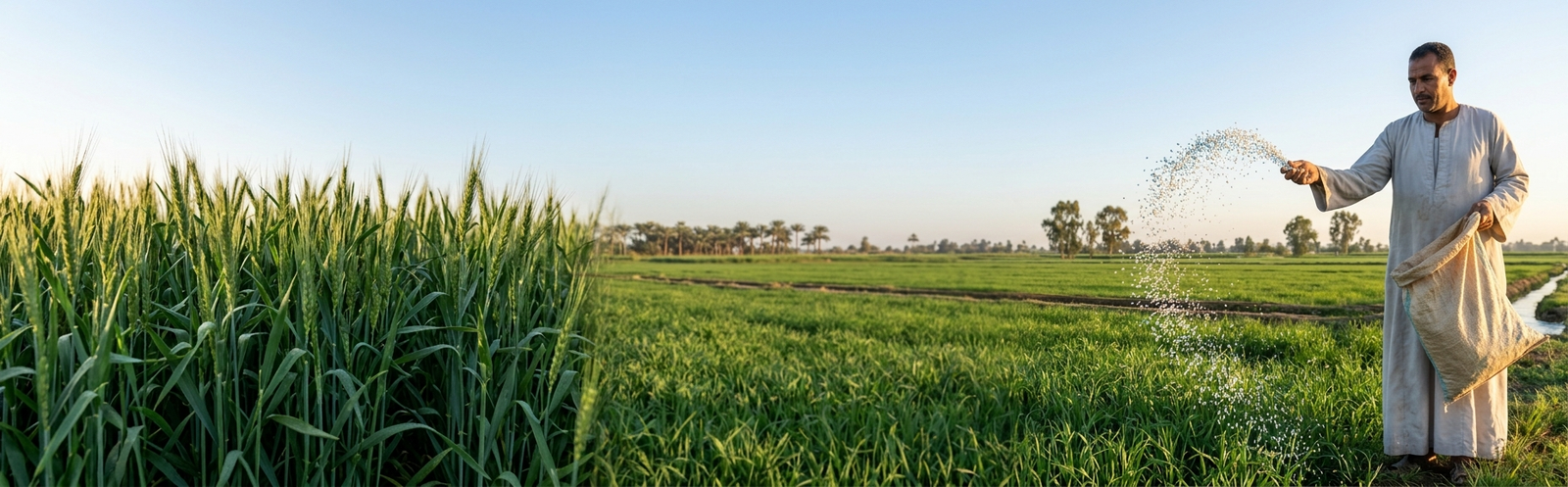
Why is fertilizer important
Crop & Agronomy Knowledge
Why Fertilizer Matters More Than Ever
Every hectare of farmland carries a hidden story of nutrients being drawn out season after season. Even the richest soil grows tired without renewal. That is where fertilizer steps in, not simply as plant food, but as an investment in the long-term productivity of the land itself.
A growing planet, a shrinking margin for error
By 2050, the world’s population is expected to surpass 10 billion. That means producing significantly more food using roughly the same amount of arable land we have today. Expanding farmland is not a realistic long-term solution, improving what we already farm is.
There is no route to that outcome without sound soil nutrition. Raising the efficiency of every hectare already under cultivation is the only lever available at the scale the problem demands.
It is not just growth, it is quality and nutrition
Fertilizer’s role goes far beyond making plants taller. Applied correctly, it shapes four things a grower is paid for:
Size, texture and appearance, the attributes buyers grade on and price against.
Enriching produce with essential minerals such as zinc, calcium and magnesium.
Helping crops withstand disease pressure and harsh weather through the season.
And a fourth that many growers overlook until harvest arrives: shelf life. Post-harvest storage performance is decided in the field, long before the crop reaches the packhouse.
Not about “more”, about “smarter”
This is the point we return to most often at The Gate. Random or excessive fertilization does not only waste the grower’s money, it damages soil structure and groundwater over the long term. The real answer is precision fertilization, built on four disciplines:
- Test the soil regularlyIdentify which elements are actually deficient, rather than assuming last season’s programme still applies.
- Set the right dose for the stageNutrient demand changes across the crop cycle. A single blanket rate serves none of those stages well.
- Apply at the right momentTiming determines how much of the applied nutrient the plant can actually take up.
- Measure and adjustFollow the crop’s real response and correct the plan during the season, not after it.
Sustainability is not optional, it is the foundation
A truly successful farmer is not the one who maximises a single harvest at the expense of soil health. Real sustainability means the land stays productive for generations, and it is achieved through:
- Preserving the natural nutrient balance of the soil
- Minimising fertilizer waste and runoff
- Combining organic and mineral fertilizers for optimal results
At The Gate, we do not just sell fertilizer
We deliver a complete solution, one that starts with truly understanding your soil’s needs and ends with a higher-quality, more profitable harvest, without compromising the land’s future.
Start with your soil, not with a product list
Send us a recent soil analysis and we will map a nutrition programme around what your land actually needs.
Talk to an agronomistRelated: Crop nutrition · How we make our fertilizers · Crop nutrition


